Japan · hotel area guide

Where to stay in Kyoto

Kyoto spreads across a wide basin with the temples concentrated on the eastern and western hills and the station at the southern edge. Shimogyo around the station is the transport base; Higashiyama sits under the eastern temples; Nakagyo is the central grid with the old merchant streets; Arashiyama lies west with bamboo and river.

Photograph of Kyoto Photo: Basile Morin · CC BY-SA 4.0

The short answer

Where should you stay in Kyoto?

Stay near Kyoto Station in Shimogyo for transport and luggage logistics; stay in Higashiyama for the eastern temples and evening walks through Gion; stay in Nakagyo for the central grid, machiya townhouses and dining; stay in Arashiyama for the quieter west.

The whole argument for sleeping in Kyoto rather than Osaka is having temples to yourself at dawn and dusk. Choose a base that actually delivers that, or the premium is wasted.

Start with the area

Four practical bases in Kyoto.

The argument for sleeping in Kyoto rather than Osaka is early mornings and late evenings at the temples, when the day crowds are absent. That argument only pays off if your base is near the temples you care about.

01

Shimogyo (Kyoto Station)

The area around the station has the widest hotel choice, the easiest luggage handling and connections to Osaka, Nara and the airport. It is efficient and unromantic. Several major temples are a short bus or subway ride, but nothing is on the doorstep — this is a base chosen for logistics.

Best for

Rail connections, luggage logistics and hotel choice.

Watch for

Functional rather than atmospheric.
02

Higashiyama

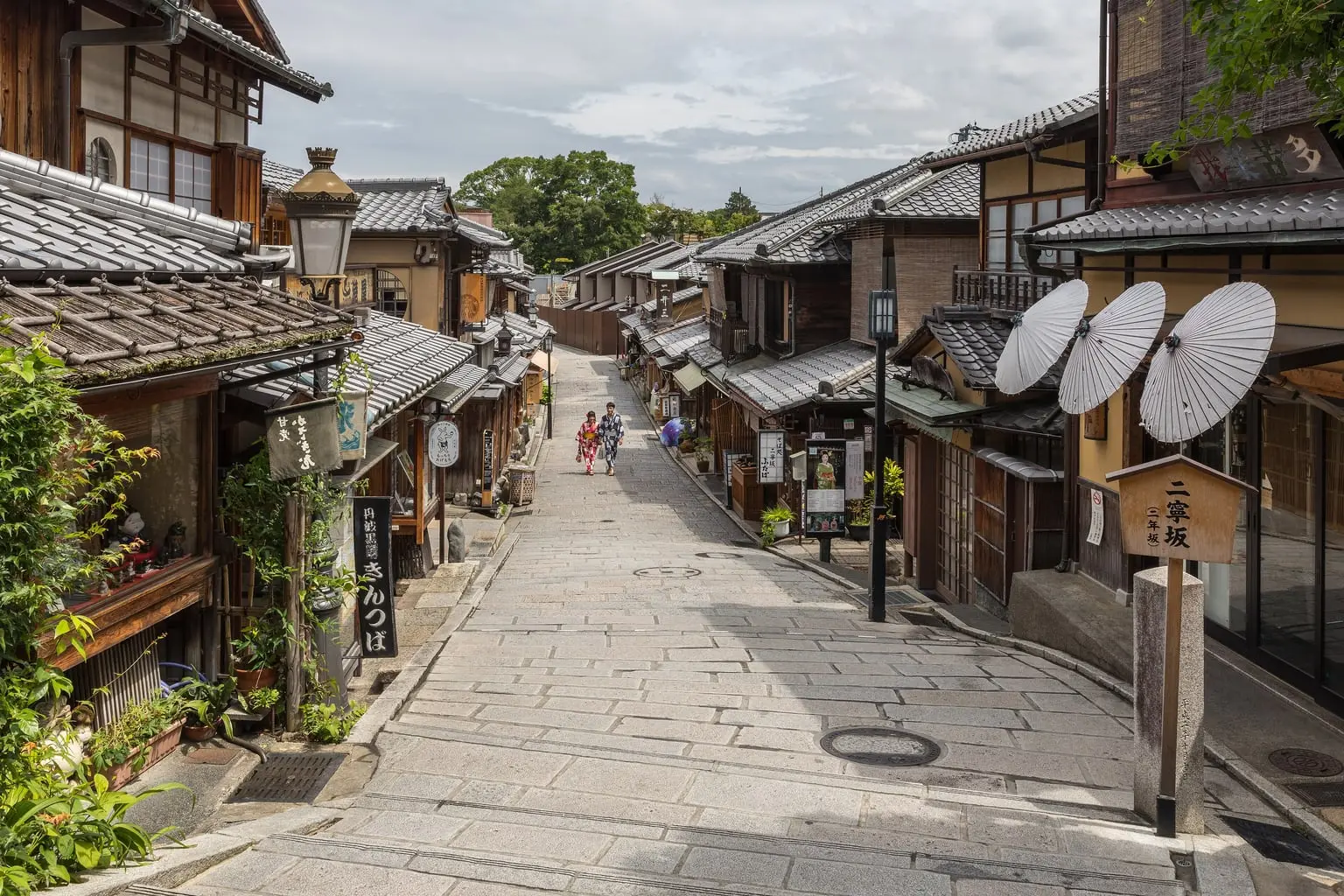
The eastern hills hold Kiyomizu-dera, the lanes of Ninenzaka and Sannenzaka, and Gion below them. Staying here means walking to temples before the buses arrive, which is the single best thing about a Kyoto stay. By day it is among the most crowded areas in Japan, and parts of it are steep.

Best for

The eastern temples, Gion and evening walks.

Watch for

Crowded by day, and hilly in places.

03

Nakagyo

The central grid contains the covered shopping arcades, Nishiki market, the best concentration of restaurants and many of the restored machiya townhouse accommodations. It is the most balanced base for a longer stay. Temples require a bus or subway, which in Kyoto usually means a bus.

Best for

Central grid, machiya townhouses and dining.

Watch for

Temples are a bus or subway ride away.

04

Arashiyama

West of the city, Arashiyama has the bamboo grove, the river, temples and mountain walks, and it empties out completely in the evening. Staying here gives you the grove without the crowds. It is a genuine journey from the centre, so it suits a split stay or a trip focused on the west.

Best for

Bamboo grove, river and a quieter west.

Watch for

Detached from the centre; a real journey each way.

Match the base to the trip

A faster Kyoto area decision.

Use these profiles as a starting point, then test the exact hotel address against the journeys you will repeat.

01

Efficiency and day trips: Shimogyo near the station.

02

Temples at dawn: Higashiyama.

03

Food, machiya and central life: Nakagyo.

04

Bamboo, river and quiet: Arashiyama.

Arrival and daily movement

Test the complete route—not only the map pin.

Transport details change. Use this planning framework, then verify the final journey with the official sources listed below.

01 / ARRIVAL

From the terminal to the hotel door

Kyoto Station is the main arrival point by rail from Osaka and the wider network, and the nearest airports are in the Kansai region rather than the city. Luggage forwarding services are widely used in Japan and can remove a great deal of friction.

Ask the property which bus routes or subway station serve it and how far the walk is with luggage. Kyoto depends more on buses than most Japanese cities, and buses with suitcases are unpleasant.

02 / GETTING AROUND

Build around the journeys you will repeat

Kyoto’s subway has two lines only; buses do most of the work and can be slow and crowded at peak times. Walking and cycling are both excellent in the flat centre. Check current bus routes and pass options at source before buying.

For the eastern and western temple clusters, plan walking loops rather than criss-crossing the city. The distances between famous sites are larger than the map suggests once buses are involved.

A clearer shortlist

What to verify before choosing.

A few property-specific answers can remove more uncertainty than another hour of scrolling.

Location checks

Ask which bus routes or subway stations serve the property — Kyoto relies heavily on buses.

Confirm room size and bed configuration; Japanese rooms are compact.

If you want empty temples, ask which are within walking distance at dawn.

Questions for the hotel

Which bus routes or subway station serve the property, and how far is the walk?

What is the room size, and what bed configuration does it have?

Which temples are within walking distance early in the morning?

Do you offer luggage forwarding or storage?

Direct-call prompt

Ask which temples are walkable from the door before the buses start running.

Find listed phone numbers →

Planning answers

Kyoto hotel area FAQ.

Answers are designed for area selection. Confirm current service, access and property terms before relying on them.

Should I stay in Kyoto or Osaka?

Kyoto if you want the temples early and late, when the day visitors are gone — that is the main reason to pay the premium. Osaka if you want more hotel choice at lower rates and do not mind travelling in each morning.

Which Kyoto area is best for temples?

Higashiyama for the eastern cluster including Kiyomizu-dera and Gion. Arashiyama for the western sights. A station base is efficient but puts nothing within walking distance.

Do I need a rail pass?

It depends entirely on your itinerary. Within Kyoto, buses and the subway matter more than rail. Check current pass coverage against your actual planned journeys rather than buying by default.

Are Kyoto hotel rooms small?

City hotel rooms are compact by international standards. Machiya townhouse accommodation is different in character and layout. Ask for the size in square metres and the bed configuration.

How crowded is Kyoto?

The main temple areas are extremely busy through the middle of the day, particularly in peak seasons. Early mornings and evenings are markedly quieter, which is the argument for staying centrally.

When is the best time to visit?

Cherry blossom and autumn colour draw the largest crowds and the highest rates, and both vary by year. Ask the property what to expect for your dates and book early if you are targeting either.

Editorial record

Reviewed by the Hotelsoncall editorial desk on . Hotel directory snapshot: Overture Maps. Transport and visitor information should be checked at source.

Official planning sources

Kyoto hotel map

Where the Kyoto hotels actually are.

1,728 mapped places to stay, drawn at their recorded position — 京都市下京区 alone holds 410 of them. Density shows where the stock sits; the four bases above say which part of it fits your trip.

Continue planning

Compare another destination guide.

Use the same area-first method across the next stops on your trip, or return to the complete guide collection.

All Asia destinations →Browse all destination guides →Open practical hotel search guides →