Italy · hotel area guide

Where to stay in Venice

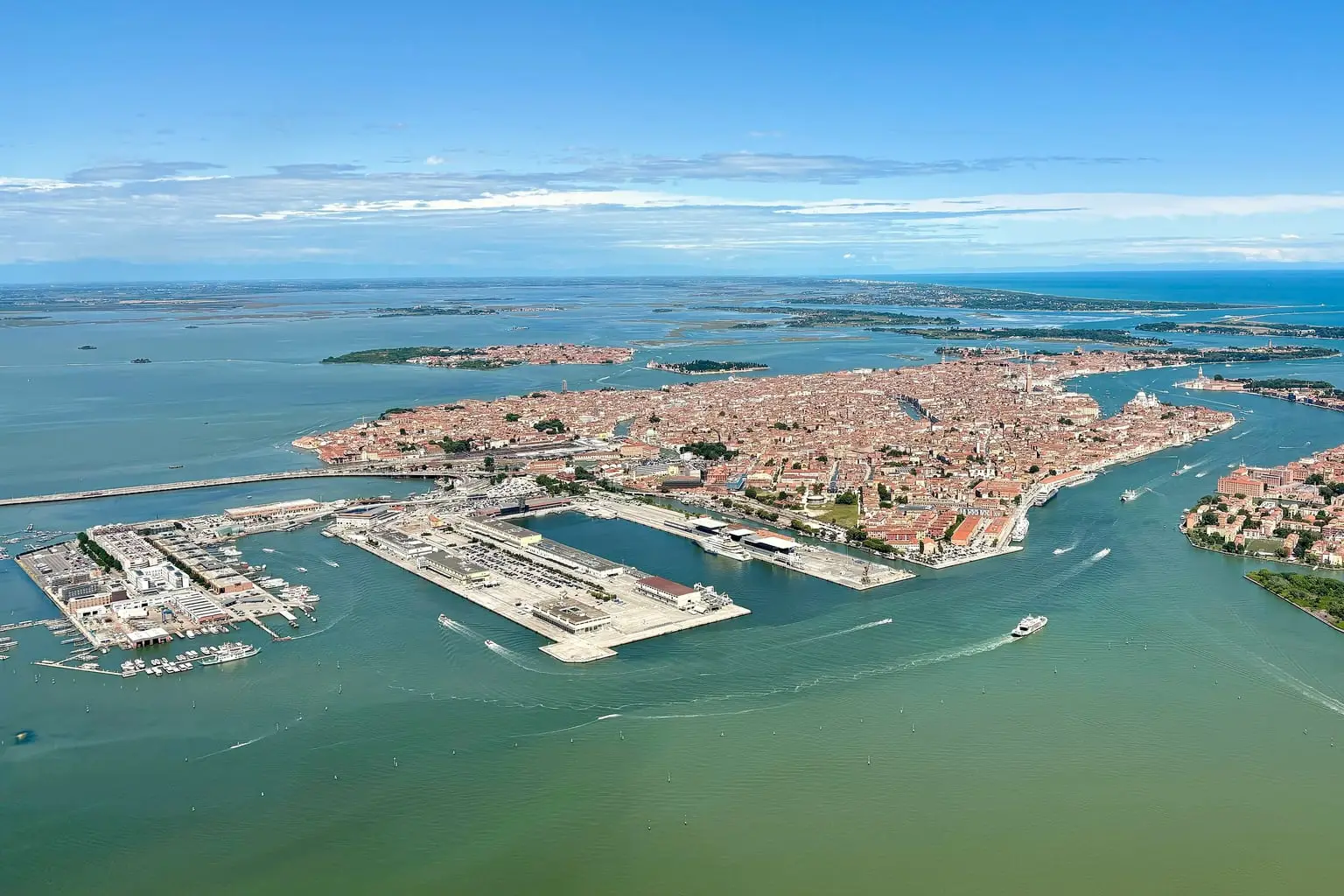
Venice is six sestieri on a lagoon, and the practical differences between them are larger than the map suggests. San Marco is the centre and the most expensive; Cannaregio runs from the station and holds more everyday life; Dorsoduro is quieter with the major galleries; Castello widens out toward the gardens.

Photograph of Venice Photo: kallerna · CC BY-SA 4.0

The short answer

Where should you stay in Venice?

Stay in Baixa-flat San Marco if being at the centre matters most and budget allows; stay in Cannaregio for station access, everyday bars and better value; stay in Dorsoduro for galleries and quieter canals; stay in Castello for space and a residential rhythm.

Then settle the luggage question before anything else. Every Venice address is reached on foot across stepped bridges or by water taxi to a private landing, and the difference between those two is the difference between an easy arrival and a miserable one.

Start with the area

Four practical bases in Venice.

The question that decides a Venice stay is not the view — it is the luggage. Every address is reached on foot over bridges with steps, or by water taxi to a private landing. Establish which before you book.

01

San Marco

The sestiere around the basilica and the piazza is the postcard and carries the prices to match. Staying here puts the major sights on your doorstep and places you inside the densest day-visitor flow between roughly mid-morning and late afternoon. Early mornings and evenings are the reward, which is the honest case for paying for it.

Best for

The basilica, the piazza and being at the centre.

Watch for

The highest prices and the densest day-visitor crowds.

02

Cannaregio

Running from the railway station along the northern edge, Cannaregio holds the Jewish Ghetto, a stretch of ordinary bars and shops, and the easiest arrival on foot with luggage. Rates are generally lower than San Marco. The immediate station area is the least atmospheric part of the city, so a few minutes deeper in makes a large difference.

Best for

Station access, local bars and better value.

Watch for

The stretch nearest the station is the least atmospheric.

03

Dorsoduro

Across the Grand Canal, Dorsoduro carries the Accademia and the Guggenheim, a university population and a calmer network of canals. It is the base most repeat visitors settle on. The trade is distance from the station: arriving on foot with heavy bags means several bridges.

Best for

Galleries, quieter canals and a student quarter.

Watch for

Further from the station on foot with bags.

04

Castello

East of San Marco, Castello widens as it goes, ending in the gardens that host the Biennale. It has the most space, the most residents and the fewest crowds of the central sestieri. The compromise is simply walking distance — the main sights are further away, which for many people is the point.

Best for

Space, gardens and a residential rhythm.

Watch for

A longer walk to the main sights.

Match the base to the trip

A faster Venice area decision.

Use these profiles as a starting point, then test the exact hotel address against the journeys you will repeat.

01

A short first visit centred on the sights: San Marco or Chiado-adjacent Castello.

02

Arriving by train with luggage: Cannaregio.

03

Galleries and quieter canals: Dorsoduro.

04

Space, residents and the Biennale: Castello.

Arrival and daily movement

Test the complete route—not only the map pin.

Transport details change. Use this planning framework, then verify the final journey with the official sources listed below.

01 / ARRIVAL

From the terminal to the hotel door

Marco Polo Airport connects to the city by bus to Piazzale Roma or by water transfer directly to several landings; the rail station at Santa Lucia sits at the north-west edge. Which arrival works best depends entirely on where your hotel is and how much you are carrying.

Ask the property which vaporetto stop it uses, how many bridges lie between that stop and the door, and whether a water taxi can reach a private landing. These three answers determine your arrival more than anything else in Venice.

02 / GETTING AROUND

Build around the journeys you will repeat

The vaporetto network is the city’s public transport and covers the Grand Canal, the lagoon islands and the outer edges. Walking handles most central journeys faster than the boat. Check current lines and passes at source, as routes are periodically revised.

There are no cars. Everything you bring is carried or floated, which is worth remembering when packing. Luggage porterage exists in Venice as a genuine paid service — ask the property whether it arranges one.

A clearer shortlist

What to verify before choosing.

A few property-specific answers can remove more uncertainty than another hour of scrolling.

Location checks

Ask how many bridges lie between the nearest vaporetto stop and the hotel door.

Confirm whether a water taxi can reach a private landing, and what that costs.

Check whether the room faces a canal, a calle or an internal court — noise differs sharply.

Questions for the hotel

Which vaporetto stop is nearest, and how many bridges lie between it and the door?

Can a water taxi reach a private landing, and what does that cost?

Does the room face a canal, a lane or an internal court?

Is luggage assistance available on arrival and departure?

Direct-call prompt

Describe your luggage and ask exactly how it will reach the room: which stop, how many bridges, and whether porterage exists.

Find listed phone numbers →

Planning answers

Venice hotel area FAQ.

Answers are designed for area selection. Confirm current service, access and property terms before relying on them.

Which sestiere should I stay in?

San Marco for immediacy and the highest prices, Cannaregio for value and easy station access, Dorsoduro for galleries and calm, Castello for space. All are central by the standards of most cities — Venice is small.

How do I get luggage to the hotel?

On foot over bridges with steps, or by water taxi to a landing if the property has one. Ask before booking; this is the single most consequential practical question in Venice.

Is it worth staying on the mainland?

It is cheaper, and it means leaving the city at the end of the day — which is precisely when Venice is at its best. If the budget allows even a small central room, staying in the city is the stronger choice.

How bad are the crowds?

Concentrated by both time and place. The route between the station, Rialto and San Marco is dense through the middle of the day and quiet early and late. Staying in the city lets you use those hours.

What about flooding?

High water occurs mainly in the colder months and is forecast in advance. Ask the property how its entrance is affected and whether raised walkways serve the immediate area.

Do I need a vaporetto pass?

It depends on how much you plan to use the boats versus walk. Many visitors walk most of the centre and buy single tickets for the lagoon islands. Check current fares and pass options at source.

Editorial record

Reviewed by the Hotelsoncall editorial desk on . Hotel directory snapshot: Overture Maps. Transport and visitor information should be checked at source.

Official planning sources

Venice hotel map

Where the Venice hotels actually are.

1,240 mapped places to stay, drawn at their recorded position — Venezia alone holds 1,068 of them. Density shows where the stock sits; the four bases above say which part of it fits your trip.

Continue planning

Compare another destination guide.

Use the same area-first method across the next stops on your trip, or return to the complete guide collection.

All Europe destinations →Browse all destination guides →Open practical hotel search guides →