Italy · hotel area guide

Where to stay in Puglia

Puglia is the heel of Italy with two coasts and a string of towns between them: Bari as the working port and transport hub, Lecce as the baroque capital of the south, Ostuni white on its hill, Monopoli and Polignano on the Adriatic rock.

Photograph of Puglia Photo: ParisTaras · CC BY-SA 4.0

The short answer

Where should you stay in Puglia?

Stay in Lecce for baroque architecture and a lively southern city; stay in Monopoli or Ostuni for whitewashed towns above the Adriatic; stay near Gallipoli or Porto Cesareo if the Ionian sand is the point; stay in Bari for transport links and the north.

The two coasts are the fork. The Adriatic is rock, cliffs and swimming platforms; the Ionian is sand and shallow water. They are a short drive apart but they produce different holidays.

Start with the area

Four practical bases in Puglia.

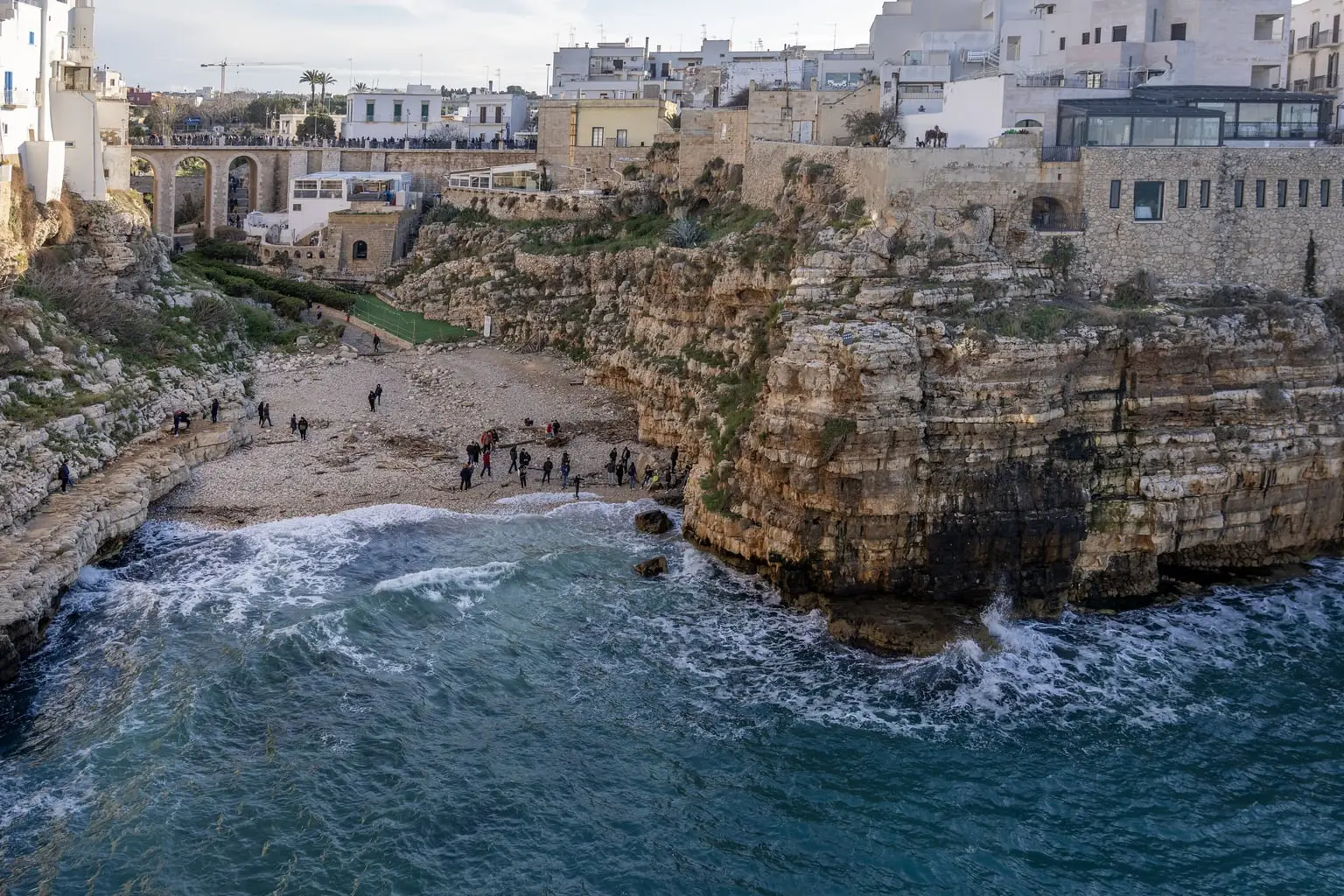
The two seas behave differently. The Adriatic side is rocky with dramatic cliffs and swimming platforms; the Ionian side toward Gallipoli has the sandy beaches. Choose the coast before the town.

01

Lecce

Lecce is the baroque capital of the Salento, built in a soft golden stone that carves well, with a compact centre full of churches, courtyards and evening life. It is the best base for the southern half of the region and works entirely on foot. Being inland, both coasts are a drive — which is fine if touring is the plan and less so if you want a beach downstairs.

Best for

Baroque architecture and a lively southern city.

Watch for

Inland — the beaches are a drive in either direction.
02

Bari

Bari is the region’s transport hub with an airport, a main rail station and ferries to the Balkans, plus a walled old town that has been substantially revived. It is practical rather than picturesque and suits a trip that starts or ends here. The better beaches lie outside the city in both directions.

Best for

Transport links, an old town and the north.

Watch for

A port city; the good beaches are outside it.

03

Monopoli & Ostuni

This stretch holds the images most people associate with Puglia — Ostuni white on its hill, Monopoli and Polignano built onto the Adriatic rock. Swimming here is frequently from platforms, ladders and small rocky inlets rather than sand, which surprises people. The countryside behind is masseria territory, where a car is essential.

Best for

Whitewashed towns and the Adriatic rock coast.

Watch for

Swimming is often from platforms rather than sand.

04

Gallipoli & Porto Cesareo

On the Ionian side, the coast turns to long sandy beaches and shallow, warm water, with Gallipoli’s old town on its island as the anchor. It is the family-beach half of the region. It is also emphatically seasonal — much of the infrastructure exists only for the summer.

Best for

Ionian sand and shallow water.

Watch for

Very seasonal, and quiet outside the summer.

Match the base to the trip

A faster Puglia area decision.

Use these profiles as a starting point, then test the exact hotel address against the journeys you will repeat.

01

Baroque architecture and evening life: Lecce.

02

Whitewashed towns and rock swimming: Monopoli or Ostuni.

03

Sandy family beaches: the Ionian coast.

04

Arrival, transport and the north: Bari.

Arrival and daily movement

Test the complete route—not only the map pin.

Transport details change. Use this planning framework, then verify the final journey with the official sources listed below.

01 / ARRIVAL

From the terminal to the hotel door

Bari and Brindisi airports serve the region from the north and the centre-south respectively, and the rail line connects the main coastal towns. Choose the airport that matches your base — the region is long and the drive between the two ends is substantial.

Masserie and countryside properties frequently sit at the end of unmade lanes. Ask the property to describe the final approach and confirm it suits your hire car, especially after dark.

02 / GETTING AROUND

Build around the journeys you will repeat

Trains link Bari, Monopoli, Ostuni, Brindisi and Lecce along the Adriatic and are a genuine option for town-to-town travel. Regional services and the Ionian side are thinner; check current schedules at source.

A car is the practical way to reach beaches, trulli villages and masserie. Historic centres frequently restrict traffic, so ask the property where to park and whether your plate needs registering.

A clearer shortlist

What to verify before choosing.

A few property-specific answers can remove more uncertainty than another hour of scrolling.

Location checks

Decide Adriatic or Ionian first — the beach experience differs completely.

In hill towns, confirm where a car can be left and how far that is from the door.

Ask whether the property is a masseria in the countryside or in a town centre.

Questions for the hotel

Which sea is nearest, and is swimming there from sand or rock?

Where can a car be parked, and is the property in a limited-traffic zone?

How far is the nearest beach on foot, and what is that route like?

What is open nearby in my travel month?

Direct-call prompt

Ask which sea is nearest, how far it is, and whether swimming there is from sand or rock.

Find listed phone numbers →

Planning answers

Puglia hotel area FAQ.

Answers are designed for area selection. Confirm current service, access and property terms before relying on them.

Adriatic or Ionian coast in Puglia?

The Adriatic for dramatic rock coast, cliff towns and platform swimming; the Ionian for sand, shallow water and family beaches. They are close enough to visit both, but your base should commit to one.

Do I need a car in Puglia?

For the countryside, the trulli villages and most beaches, yes. The Adriatic rail line covers the main towns well, so a car-free trip is possible if you stay on it and accept a narrower range.

What is a masseria?

A fortified farmhouse, many of which have been converted into hotels. They are a distinctive way to stay in the region and almost always require a car — they sit in open countryside, not in towns.

Which airport should I use?

Bari for the north and centre, Brindisi for the south and the Salento. Ask your property which it recommends; the drive between them is long enough to matter.

Is Puglia busy?

August is very busy along both coasts, with beach parking filling early. The shoulder months are considerably calmer and the towns remain fully open.

Can I swim off the rocks safely?

Many Adriatic properties provide ladders, platforms or small beach clubs. Ask the property to describe its own sea access specifically, including whether shoes are advisable.

Editorial record

Reviewed by the Hotelsoncall editorial desk on . Hotel directory snapshot: Overture Maps. Transport and visitor information should be checked at source.

Official planning sources

Puglia hotel map

Where the Puglia hotels actually are.

7,360 mapped places to stay, drawn at their recorded position — Lecce alone holds 473 of them. Density shows where the stock sits; the four bases above say which part of it fits your trip.

Continue planning

Compare another destination guide.

Use the same area-first method across the next stops on your trip, or return to the complete guide collection.

All Europe destinations →Browse all destination guides →Open practical hotel search guides →