Greece · hotel area guide

Where to stay in Rhodes

Rhodes carries a walled medieval town at its northern tip and a long coastline running south from it, with the resort strips concentrated in the north and the villages thinning out toward Lindos. The island splits by coast as much as by town: the west side takes the wind, the east side is calmer.

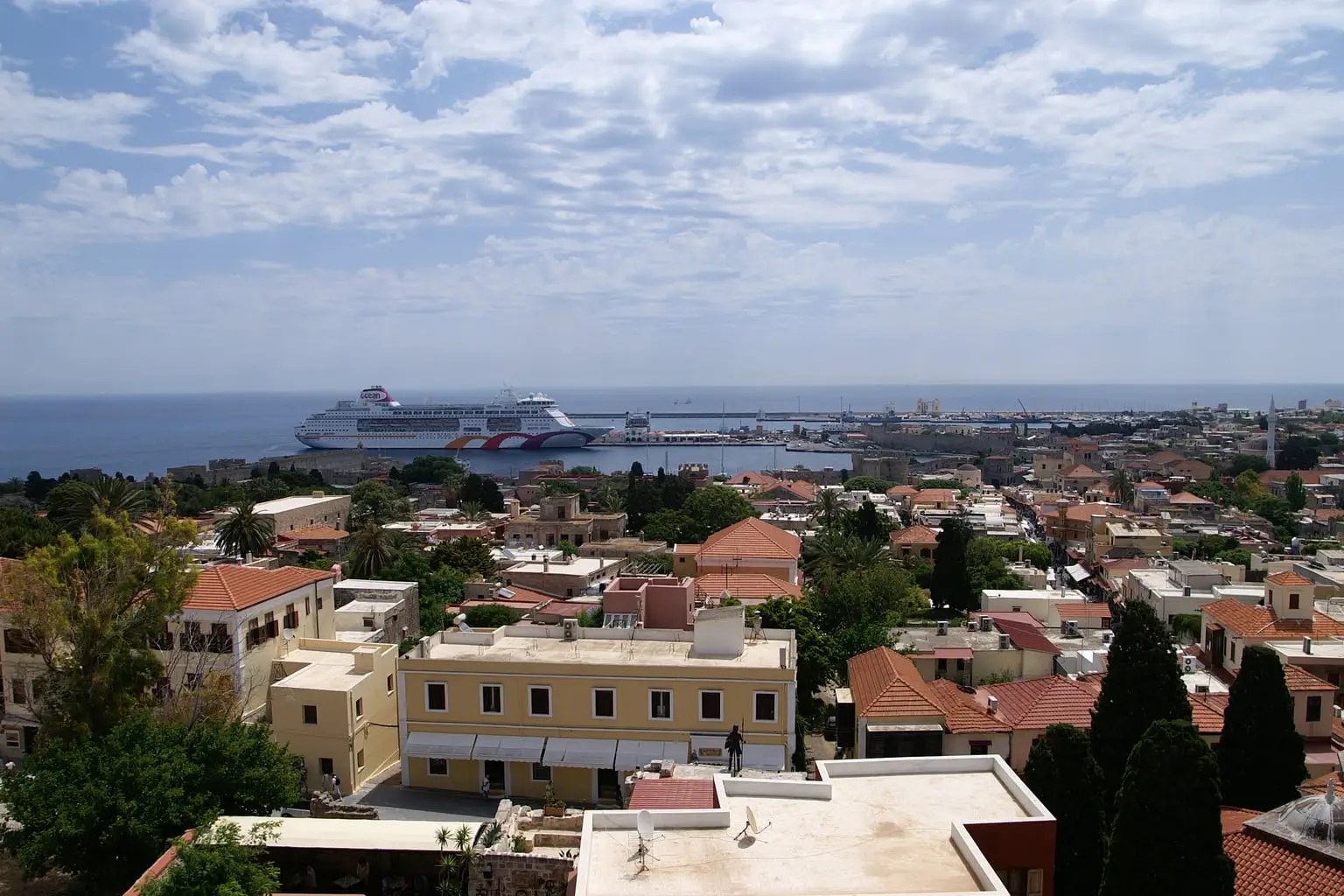
Photograph of Rhodes Photo: Böhringer Friedrich · CC BY-SA 2.5

The short answer

Where should you stay in Rhodes?

Stay in Rhodes Town for the walled medieval city and everything on foot; stay on the sheltered east coast around Kallithea and Faliraki for reliable beach days; stay in Lindos for a whitewashed village under an acropolis, accepting the distance and the steps.

The detail that catches people out here is wind. The west coast takes the prevailing breeze and the east coast is calmer, and no photograph shows the difference. Ask which side of the island the property faces before comparing anything else.

Start with the area

Four practical bases in Rhodes.

That wind is the detail most first-time visitors miss. It makes the west coast excellent for surfing and unpleasant for a lazy beach day, and it does not appear in a hotel photograph. Ask which coast you are on before anything else.

01

Rhodes Town

The medieval walled town is one of the best-preserved in the Mediterranean and is genuinely lived in rather than a museum piece. Staying inside or beside the walls puts restaurants, the Palace of the Grand Master and the harbour on foot. Beaches nearby are narrow and busy, so this is a base for a trip about the town rather than the sea.

Best for

The walled old town, restaurants and history on foot.

Watch for

Beaches nearby are narrow and busy.
02

Ialysos

On the western shore just south of the town, Ialysos carries a run of large resorts and is the centre of the island’s windsurfing. That is the honest summary of the trade: excellent for water sports, less reliable for a still afternoon on a lounger. If a calm sea matters to your week, this is the wrong coast.

Best for

Big resorts and water sports on the western shore.

Watch for

The prevailing wind makes calm swimming days less reliable.

03

Kallithea & Faliraki

The eastern bays are sheltered, which makes them the dependable choice for swimming and for families. Faliraki has the larger resort infrastructure and the busier nightlife; Kallithea is quieter with rocky coves and the restored springs. It is a resort corridor rather than a village, so expect hotels rather than local life.

Best for

Sheltered eastern bays and family resorts.

Watch for

A resort corridor rather than a village.

04

Lindos

A cluster of white houses beneath an ancient acropolis above two bays — the most photographed place on the island and, in high season, the busiest. Vehicles stop at the village edge, so the last stretch is on foot through stepped lanes. Worth it for the setting, provided you know that in advance.

Best for

A whitewashed village under an acropolis.

Watch for

Far from the airport and largely pedestrian.

Match the base to the trip

A faster Rhodes area decision.

Use these profiles as a starting point, then test the exact hotel address against the journeys you will repeat.

01

History and a walkable evening: inside or beside the old town.

02

Reliable swimming and family resorts: the sheltered east coast.

03

Windsurfing and water sports: the western shore.

04

A village setting and the acropolis: Lindos, with the steps accepted.

Arrival and daily movement

Test the complete route—not only the map pin.

Transport details change. Use this planning framework, then verify the final journey with the official sources listed below.

01 / ARRIVAL

From the terminal to the hotel door

Rhodes Airport sits on the west coast a short distance from the town, so northern hotels are a quick transfer while Lindos and the south are a considerably longer drive. Ask for a door-to-door figure rather than a distance.

For Lindos in particular, confirm where a vehicle can stop and whether the property arranges luggage transfer through the village. The stepped lanes are charming and unhelpful with a suitcase.

02 / GETTING AROUND

Build around the journeys you will repeat

A bus network runs down both coasts from Rhodes Town and covers the main resorts and Lindos, with reduced service outside the season. Check current timetables at source before relying on them for a fixed plan.

A car opens up the south of the island and the inland villages, which are otherwise difficult to reach. In Rhodes Town, note that the walled old town is pedestrian — ask the property where parking actually is.

A clearer shortlist

What to verify before choosing.

A few property-specific answers can remove more uncertainty than another hour of scrolling.

Location checks

Ask which coast the hotel faces — the wind exposure differs sharply between them.

For Lindos, confirm whether vehicles can reach the property or stop at the village edge.

Check whether the old town address is inside the walls; access and noise both change there.

Questions for the hotel

Which coast does the property face, and how exposed is it to the prevailing wind?

Is the beach sand or pebble, and is it organised?

For old town or Lindos addresses — where can a vehicle stop, and how far is that?

Does a bus stop nearby, and how frequent is it in my travel month?

Direct-call prompt

Ask whether the beach in front of the property is normally sheltered, and what a typical afternoon looks like in your travel month.

Find listed phone numbers →

Planning answers

Rhodes hotel area FAQ.

Answers are designed for area selection. Confirm current service, access and property terms before relying on them.

Which side of Rhodes is best for swimming?

The east coast. It is sheltered from the prevailing wind, which makes for calmer water and more reliable beach days. The west coast is better suited to windsurfing and can be choppy on the same afternoon the east is flat.

Is it worth staying inside the old town?

If the town is the reason for the trip, yes — the atmosphere after the day visitors leave is the main argument for it. Be aware that access is pedestrian, some buildings are old and stepped, and the nearest good beach is not walkable.

How far is Lindos from the airport?

Lindos is toward the south-east while the airport is on the north-west coast, so it is a substantial drive rather than a short hop. Ask the property for a realistic door-to-door time and clarify where a transfer can drop you.

Do I need a car in Rhodes?

Not for a stay in the town or a north-coast resort, where buses and taxis cover most needs. A car becomes useful for the southern half of the island and the inland villages, which are poorly served by public transport.

Is Rhodes busy outside summer?

The old town stays lively year-round, but many coastal resorts and beach facilities are strictly seasonal. Ask the property what is operating during your dates rather than assuming the shoulder season looks like summer.

Are there accessible options in the old town?

Some, but the medieval street surface and steps make it difficult in places. If step-free access matters, discuss the specific route from vehicle to room with the property rather than relying on a general accessibility statement.

Editorial record

Reviewed by the Hotelsoncall editorial desk on . Hotel directory snapshot: Overture Maps. Transport and visitor information should be checked at source.

Official planning sources

Rhodes hotel map

Where the Rhodes hotels actually are.

1,206 mapped places to stay, drawn at their recorded position — Ρόδος alone holds 292 of them. Density shows where the stock sits; the four bases above say which part of it fits your trip.

Continue planning

Compare another destination guide.

Use the same area-first method across the next stops on your trip, or return to the complete guide collection.

All Europe destinations →Browse all destination guides →Open practical hotel search guides →