South Africa · hotel area guide

Where to stay in Cape Town

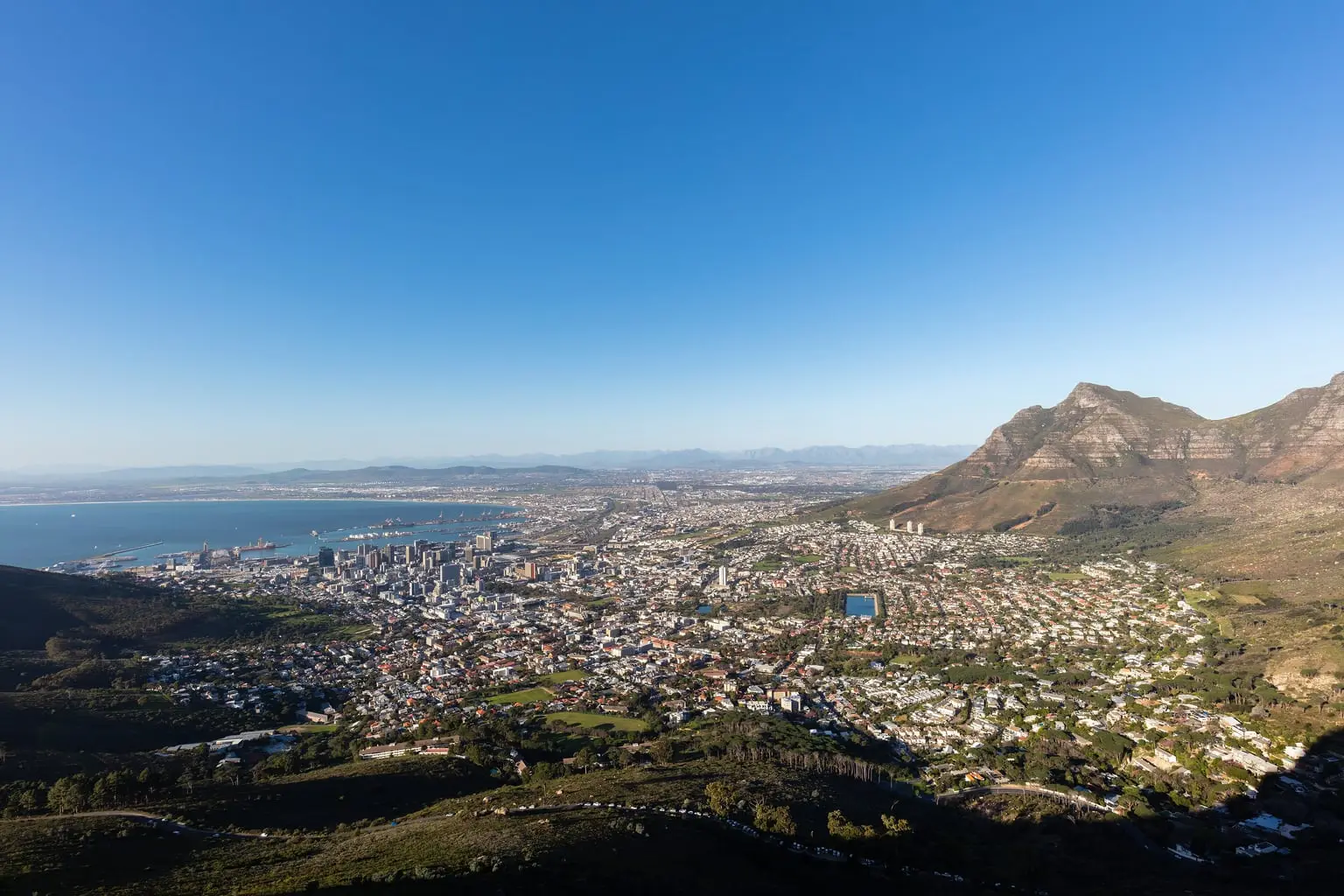
Cape Town sits between a mountain and two oceans, and the neighbourhoods differ accordingly. The City Bowl holds the centre beneath Table Mountain; the V&A Waterfront is a secure harbour development; Camps Bay and the Atlantic Seaboard run along the western beaches; the winelands begin inland.

Photograph of Cape Town Photo: Diego Delso · CC BY-SA 4.0

The short answer

Where should you stay in Cape Town?

Stay in the City Bowl for restaurants, galleries and Table Mountain on your doorstep; stay at the V&A Waterfront for a secure, self-contained base; stay in Camps Bay or along the Atlantic Seaboard for beaches and sunsets; stay in Hout Bay or the south for the peninsula and a village feel.

Two local realities shape the week: the south-easterly wind, which can make one beach unusable while another is calm, and the sensible habit of arranging evening transport rather than walking unfamiliar routes after dark.

Start with the area

Four practical bases in Cape Town.

Two local realities shape a stay: the south-easterly wind, which can make one beach unusable while another is calm, and the practical need to plan evening transport rather than walk unfamiliar routes after dark.

01

City Bowl

The centre sits in a bowl beneath Table Mountain and includes the city proper, Bo-Kaap, the Company’s Garden and neighbourhoods such as Gardens and Tamboerskloof. It has the best concentration of restaurants and galleries and the shortest access to the mountain. It is quiet at night in parts, and most visitors use rides rather than walking after dark.

Best for

Restaurants, galleries and Table Mountain access.

Watch for

Quiet at night in parts; plan transport.
02

V&A Waterfront

The redeveloped harbour is a self-contained environment of hotels, shops, restaurants and the departure point for Robben Island. It is secure, convenient and easy with children. It is also a managed commercial development rather than a neighbourhood, and prices reflect the location.

Best for

Security, shopping and boat departures.

Watch for

A managed environment rather than a neighbourhood.

03

Camps Bay & Clifton

Over the shoulder of the mountain, these Atlantic beaches sit beneath the Twelve Apostles with a strip of restaurants behind. The setting is spectacular and the sunsets are the point. The water is genuinely cold, the wind can be strong, and rates are among the highest in the city.

Best for

Atlantic beaches and sunsets under the Twelve Apostles.

Watch for

Expensive, exposed to wind, and cold water.

04

Hout Bay & the south

Further along the peninsula, Hout Bay is a harbour village with a beach and a more relaxed pace, and the road south leads to Cape Point and the Cape of Good Hope. It suits travellers touring the peninsula. A car makes a substantial difference here.

Best for

A harbour village and the peninsula drive.

Watch for

Away from the city; a car helps considerably.

Match the base to the trip

A faster Cape Town area decision.

Use these profiles as a starting point, then test the exact hotel address against the journeys you will repeat.

01

Restaurants, galleries and the mountain: City Bowl.

02

Security, shopping and boats: V&A Waterfront.

03

Beaches and sunsets: Camps Bay or Clifton.

04

Peninsula touring and a village feel: Hout Bay.

Arrival and daily movement

Test the complete route—not only the map pin.

Transport details change. Use this planning framework, then verify the final journey with the official sources listed below.

01 / ARRIVAL

From the terminal to the hotel door

Cape Town International Airport is a reasonable drive from the city with taxis, ride-hailing and hotel transfers available. Ask the property what it recommends, particularly for a late arrival.

It is normal and sensible here to ask a property about safe arrival and about which routes and transport it recommends at night. Staff answer this constantly and will give practical, specific advice.

02 / GETTING AROUND

Build around the journeys you will repeat

Ride-hailing is widely used and inexpensive; a bus rapid-transit network covers some corridors and a hop-on tourist bus serves the main sights. Ask the property what it recommends for your intended routes.

A hire car is genuinely useful for the peninsula and the winelands. Ask about secure parking, and about the property’s arrangements during any scheduled power interruptions, which have affected the country in recent years.

A clearer shortlist

What to verify before choosing.

A few property-specific answers can remove more uncertainty than another hour of scrolling.

Location checks

Ask how the property recommends getting around at night — it is a normal question here.

Check which beaches are sheltered when the south-easter blows.

Confirm whether the property has backup power arrangements.

Questions for the hotel

What transport do you recommend for evenings, and do you arrange it?

Does the property have backup power, and how does it work?

Which beaches are sheltered when the south-easter blows?

Is parking secure and included?

Direct-call prompt

Ask what transport the property recommends for evenings, and whether it arranges airport transfers.

Find listed phone numbers →

Planning answers

Cape Town hotel area FAQ.

Answers are designed for area selection. Confirm current service, access and property terms before relying on them.

Where should I stay in Cape Town?

City Bowl for restaurants and mountain access, the V&A Waterfront for convenience and security, Camps Bay for beaches and sunsets, Hout Bay for the peninsula. Each is a genuinely different week.

Is Cape Town safe for visitors?

Ordinary city precautions apply and vary by area and time of day. Ask your property directly which routes it recommends, what to avoid after dark and what transport to use — they answer this daily and the advice is practical.

Can you swim at Camps Bay?

The Atlantic here is cold year-round and the wind can be strong. Many visitors sunbathe rather than swim. The False Bay side of the peninsula has noticeably warmer water.

What is the south-easter?

A strong prevailing wind that affects the city in the warmer months, making some beaches unpleasant while others stay sheltered. Ask your property which nearby beaches work on windy days.

Do I need a car?

Not for the City Bowl and the Waterfront, where ride-hailing covers most needs. Yes, effectively, for the peninsula drive and the winelands, where public transport is limited.

What about power interruptions?

Scheduled electricity interruptions have affected the country in recent years. Ask the property whether it has backup power and what is affected during an outage.

Editorial record

Reviewed by the Hotelsoncall editorial desk on . Hotel directory snapshot: Overture Maps. Transport and visitor information should be checked at source.

Official planning sources

Cape Town hotel map

Where the Cape Town hotels actually are.

2,309 mapped places to stay, drawn at their recorded position — Cape Town alone holds 1,136 of them. Density shows where the stock sits; the four bases above say which part of it fits your trip.

Continue planning

Compare another destination guide.

Use the same area-first method across the next stops on your trip, or return to the complete guide collection.

All Africa destinations →Browse all destination guides →Open practical hotel search guides →